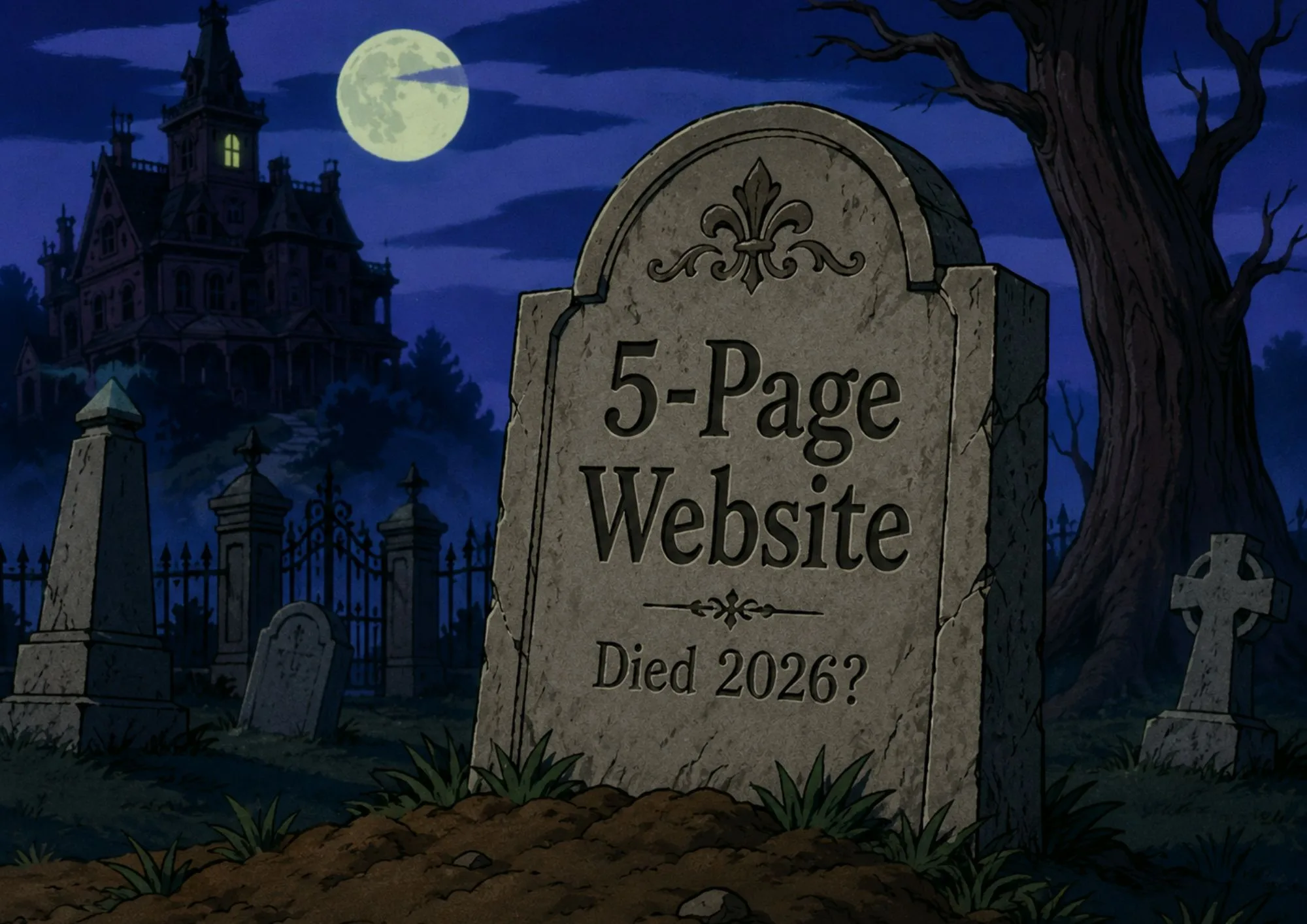
The Search Has Changed. Most Websites Haven’t.
Search is evolving fast. As AI reshapes how people ask, compare, and decide, most websites are falling behind... Still written for keywords, not intent, clarity, or the specificity modern users now expect.
There’s a quiet shift happening in how people find businesses. Not incremental, but structural. If you’re still thinking in terms of “keywords,” “SEO pages,” and “ranking on Google,” you’re already slightly out of date.
A recent piece from BBC News highlights what many in tech have been sensing for a while: AI isn’t just improving search. It’s redefining it. That has real consequences for how your website should be written.
From Searching… to Asking
Search used to be blunt.
“Web design Dundee”
“Mortgage broker Dubai”
“Best CRM for small business”
Short. Generic. Imprecise. But now? Users are asking full, contextual questions, like: -
“Which companies in Dundee can redesign my website to generate more leads, not just look better?”
“What’s the best mortgage option for a self-employed expat in Dubai?”
“How do I improve my website without rebuilding everything from scratch?”
That’s not search. That’s intent… and AI is built to understand it.
The Death of Generic Content
Most websites today are still written for the old model: -
Service pages full of vague claims
Blog posts written to “hit keywords”
Copy designed to rank, not to answer
The problem is simple. AI doesn’t need your keywords. It needs your clarity. When someone asks a specific question, AI doesn’t scan for who used the keyword the most. It looks for who actually answered the question best. That’s a very different game.
Specificity Is the New Currency
The real shift isn’t technical. It’s behavioural. Users now have the tools to be more specific. So they are. That means your content needs to meet them there.
Not with broad statements like “We provide high-quality web design services,” but with grounded, contextual answers like “If your website looks good but isn’t generating leads, the issue is usually structure, not design. Most small business websites fail because they prioritise visuals over conversion pathways.”
That’s the difference. One fills space. The other earns attention.
AI Doesn’t Just Find You. It Interprets You.
Here’s the part most businesses are missing. AI doesn’t just show your content. It summarises, compares, and recommends it. That means: -
Weak, generic content gets ignored
Surface-level content gets diluted
Only clear, useful, well-structured thinking gets surfaced
You’re no longer just competing to be found. You’re competing to be understood.
What This Means for Your Website
This isn’t about “optimising for AI.” It’s about writing like a human who actually understands the problem they’re solving. In practice, that means: -
Write for real questions, not keywords. Build content around how your clients actually think and speak.
Go deeper, not broader. Generic pages won’t survive. Specific, insight-led content will.
Show your thinking. AI favours clarity. Explain why things work, not just what you do.
Structure matters more than ever. Clear headings, logical flow, and well-organised ideas help both users and AI interpret your content.
Stop trying to sound impressive. Start trying to be useful.
The Businesses That Win
The winners in this next phase won’t be the ones with the most content. They’ll be the ones with the clearest thinking. The ones who: -
Understand their customer deeply
Speak in real-world terms
Answer real problems with precision, and
Aren’t hiding behind marketing language
When a user asks a better question, only better answers survive.
Final Thought
This isn’t an SEO update. It’s a mindset shift. Search is no longer about being visible. It’s about being relevant, on demand, in context and with clarity.
If your website isn’t written that way yet, it’s not just underperforming. It’s slowly becoming invisible.